existdissolve.com
the singularity of being and nothingness
the singularity of being and nothingness

Jun 13th
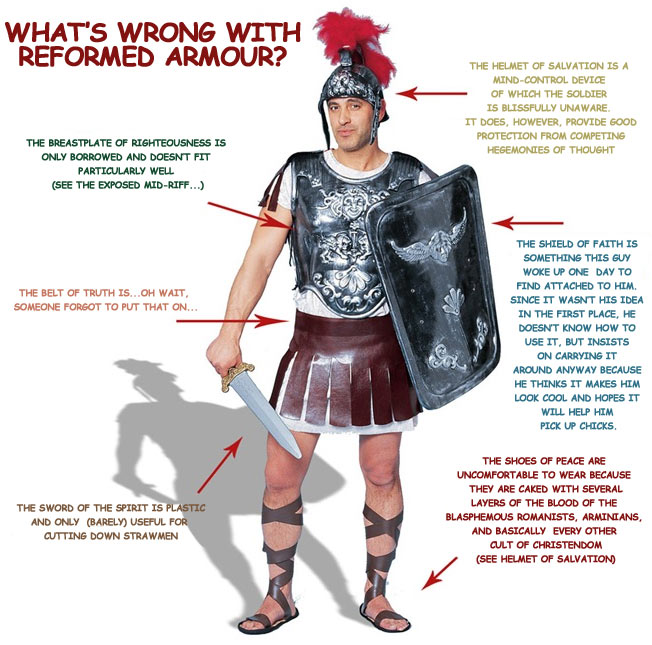
Ok, I ran across this humorous picture the other day, and just couldn’t resist spoofing it to my own ends.
Enjoy!

Jun 12th
Over the past weeks, I’ve listened with great interest to people’s opinions about the BP debacle in the Gulf of Mexico. With little deviation, most reactions have been a combination of disgust, anger, and finger pointing. While I certainly understand such feelings, let me offer another perspective. Warning: it probably will not be popular…
To start off, let me make this clear. BP (and other contractors involved) is certainly responsible for great negligence and sheer incompetence. They should be held responsible for their role in this disaster, and I personally hope that they are made to help for years to come in cleanup and restoration efforts.
However, before we begin erecting soapboxes against oil companies, let’s not forget our own culpability. Sure, BP was negligent-perhaps criminally so. But what caused this? Greed? Sure. Oil companies are out to make money, and they-like everyone else-want to make as much of it as they can. But what drives their profits? Do they make money simply from the pure act of extracting crude from beneath the earth? No. They make money by fulfilling a need for petroleum. And currently in the West (and now the developing world), that need is thoroughly insatiable.
In the West, we More >

Jun 11th
When I first got into web development, one of my first projects was to create a custom blog for myself. Apart from the sheer necessity of needing a blog at the time, I embarked on this coding journey because I had read somewhere that developing a blog would provide a good introduction to the nitty-gritty of application design.
While this wasn’t 100% accurate, it also was not terrifically far from the truth. Through many struggles and achievements, I finally wound up with my own custom blog, complete with commenting system, RSS delivery, and eventually automatic posting to Twitter.
This modest blog served me pretty well for a few months, but I quickly outgrew it. I found myself pouring precious hours into little development projects to try to get it to do cool stuff that I came across in other, more robust systems.
Eventually, however, I ran out of time and motivation. First, the continual development stopped. Then, out of total laziness, important things like bug fixes and comment-security fell to the wayside. While I still loved to blog, the sheer effort of posting (my interface was a bit clunky…) was a big hindrance, so the posts became quite sparse.
Then I got my iPhone. More >
Jun 9th
I’ve often wanted to blog about finding interesting books in places other than used book stores, estate sales, and the like. For example, what books do furniture stores use for decoration? What volumes line the shelves of a hotel breakfast nook?
Well, I finally found my chance. Armed with my iPhone, I took some quick snapshots of some of the more interesting titles that I came across at the Homewood Suites in downtown Baltimore. Enjoy!
Jun 6th
If you saw my post about the Monty Hall Problem, you know that calculating the probabilities in this puzzle, while not terrifically complicated, are nonetheless a bit frustrating to our feelings of common sense. Therefore, I decided to whip up a quick script that would simulate the Monty Hall problem in code.
It turns out that this has been done many times before, and if you head on over to rosettacode.org, you can find scripts for nearly every language you could imagine…except ColdFusion.
Thinking this to be an incredible travesty, I have produced a CF version of the problem, and have posted it over at rosettacode.org.
If you’re too lazy to click a link, however, here is the script in its entirety:
<cfscript>
	function runmontyhall(num_tests) {
		// number of wins when player switches after original selection
		switch_wins	= 0;
		// number of wins when players "sticks" with original selection
		stick_wins  = 0;
		// run all the tests
		for(i=1;i<=num_tests;i++) {
			// unconditioned potential for selection of each door
			doors 	= [0,0,0];
			// winning door is randomly assigned...
			winner 	= randrange(1,3);
			// ...and actualized in the array of real doors
			doors[winner] = 1;
			// player chooses one of three doors
			choice 	= randrange(1,3);
			do {
// More > 
Jun 5th
This is a classic!
Consider you’re on the game show Let’s Make a Deal!. The game is simple: there are 3 doors presented to you. One of the them has a fabulous prize behind it, while the other two hide nothing but shattered dreams.
When you initially select a door, the host (Monty Hall) will reveal one of the doors which hides your shattered dreams. Because Monty knows which doors conceal what, he will always reveal one door that is empty, while always leaving 1 empty and 1 prize door.
* If you initially select the winning door, Monty will reveal an empty door. * If you initially select an empty door, Monty will reveal the other empty door.
Left with two doors (one with the prize, the other with nothing), you have the opportunity to either stick with your initial selection, or vacillate entirely and change your mind, selecting the other remaining door.
So the question is simple: Should you stick or change?
The answer, quite counter-intuitively, is that you should most definitely change.
WHAT?? How does this make any sense? If there are two doors left, surely the probability of winning or losing is equivalent, right?
Nope. But why?
Let’s look at this in steps.
Initially (unconditioned), the probability of selecting More >
Jun 4th
So here’s our 2 probability puzzles:
Puzzle #1: I have two children. One of my children is a boy. What is the probability that I have two boys?
Puzzle #2: I have two children. One of my children is a boy who was born on Tuesday. What is the probability that I have two boys?
Let’s tackle the first one. By sheer intuition, the average person would probably answer that the probability of the second child being a boy is 50% (I know I did the first time). After all, the population is (seemingly) roughly divided equally between males and females, so it just feels right that the answer is somewhere around 50%.
However, there is a bit of a trick in the question. The question, after all, is not actually asking about the chances that any particular, individual child is male or female. Rather, it’s asking what the probability that both children are boys is, based on the knowledge that one is a boy.
So how do we work this out? First, we need to represent all the possible arrangements of children in this scenario. Since one is already known to be a boy, the possible arrangements are:
Boy - Boy (1/3) Boy - Girl (1/3) Girl More >
Jun 4th
I recently puzzled through some interesting probability riddles with some co-workers, and thought I would share. It comes in two parts (somewhat related). To allow you to work these out on your own without *accidentally* seeing the answer, I’ll simply state the riddles on this note, and provide the answers on the second
Here goes:
Puzzle #1: I have two children. One of my children is a boy. What is the probability that I have two boys?
Puzzle #2: I have two children. One of my children is a boy who was born on Tuesday. What is the probability that I have two boys?
Here are the answers.

May 29th
I recently worked on a project which, among other things, involved implementing the "easybe 1-2-3" music store software (basically, it's a pretty simple-to-use platform for managing for-sale music downloads).
One of the major drawbacks of this software is that it doesn't come pre-built with a music player. While it does provide links to file samples that users can download and listen to (way too many steps for 30 seconds…), there's no one-step player for checking out clips from all the songs on an album.
No fear! There are ways around this, and in the following I'll walk you through the simple steps to deploy a free, light-weight mp3 player that can play the music you want your visitors to hear.
First, let's get the mp3 player. While you could use many of the freely-available mp3 players out there, I like the one from premiumbeat.com. It's super-stipped down and simple to use. Plus, it accepts an XML file, which will work perfectly for our needs.
Once you have the mp3 player of your choice, go ahead and deploy it on your server. Don't worry, I'll wait until you're done.
All set? Excellent. The next step is to open up the Album Details template file in More >
 Brambleleaf: Can people add me? I'm ^=Brambleleaf=^
 existdissolve: Hi Tony--
Thanks! The internationalization sounds like a great idea. Do you have an example or two...
existdissolve: Hi Tony--
Thanks! The internationalization sounds like a great idea. Do you have an example or two... Tony: Looks really useful. Thanks for sharing this. My wish would support for i18n internationalization....
 CKEditor Plugin: Redux: [...] Gloss « ContentBox: Creating a CKEditor Plugin for Complex Data Types...CFML Open Source Update #7 - 2012-12-24 - 2013-01-07 « Mister Dai: [...] ContentBox: Editable Content Regions in CKEditor [...]CFML Open Source Update #7 - 2012-12-24 - 2013-01-07 « Mister Dai: [...] ContentBox: Hooking into the Page Editor [...]
 Andrew Scott: Would have to agree..